On 4 November 1952 a magnitude 9.0 earthquake struck off the Kamchatka Peninsula in the Soviet Far East — still the most powerful earthquake ever recorded in Russia and one of only five M9+ quakes ever measured by modern instruments. It ruptured the boundary where the Pacific Plate dives beneath the Okhotsk Plate along the Kuril–Kamchatka Trench.
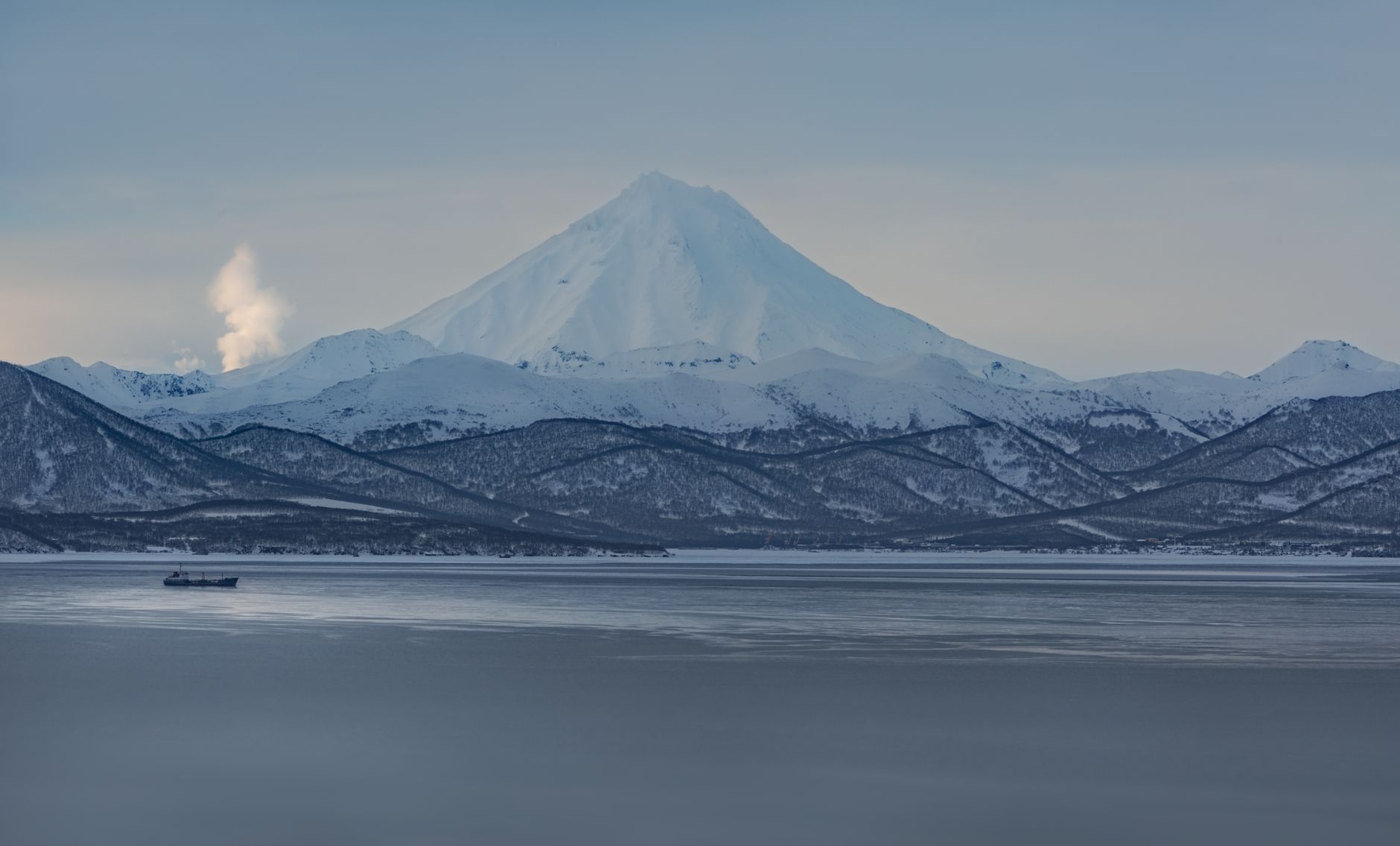
The local tsunami reached an estimated 15–18 metres and effectively wiped out the town of Severo-Kurilsk in the Kuril Islands, where an official toll of 2,336 deaths was later recorded. Broader estimates for the whole Kamchatka–Kuril region range as high as 15,000, though the true figure has never been confirmed.
The wave then crossed the Pacific, reaching Hawaii about nine hours later and causing roughly $17 million (2011 USD) in damage in Hilo, before continuing on to strike Alaska and, some 18 hours after the quake, the coast of South America.
Because the disaster struck deep inside the closed Soviet Union, Moscow suppressed news of both the earthquake and the tsunami for years, and no official casualty figures were ever released — making Kamchatka 1952 one of the least-documented M9-class earthquakes in modern history despite its enormous scale.