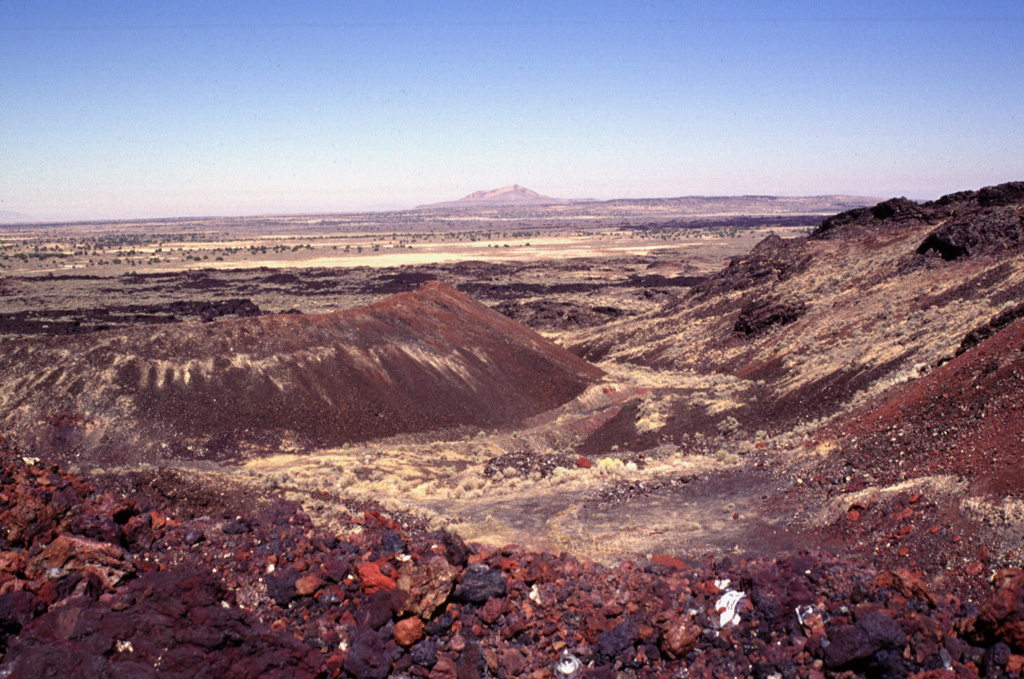
The Black Rock Desert volcanic field consists of a group of closely spaced small Pleistocene-to-Holocene volcanic fields in the Black Rock and Sevier deserts of south-central Utah, at the eastern margin of the Great Basin. The Black Rock Desert field contains both Utah's youngest known rhyolite dome (400,000 years old) and its youngest eruptive vent, which produced the roughly 660-year-old Ice Springs lava flows. The broader volcanic field includes the smaller Deseret, Pavant, Kanosh, Tabernacle, Ice Spring, and northern Black Rock Desert fields. The Pavant Butte and Tabernacle Hill tuff cones were erupted about 16,000 and 14,000 years ago through the waters of glacial Lake Bonneville. Lava flows from the Ice Springs crater complex traveled about 4 km west and north, overlapping late-Pleistocene flows from Pavant Butte.
Black Rock Desert Volcano — United States
Advertisement
Recent earthquakes nearby
- …
Biggest historic earthquakes in the area
- …
Advertisement