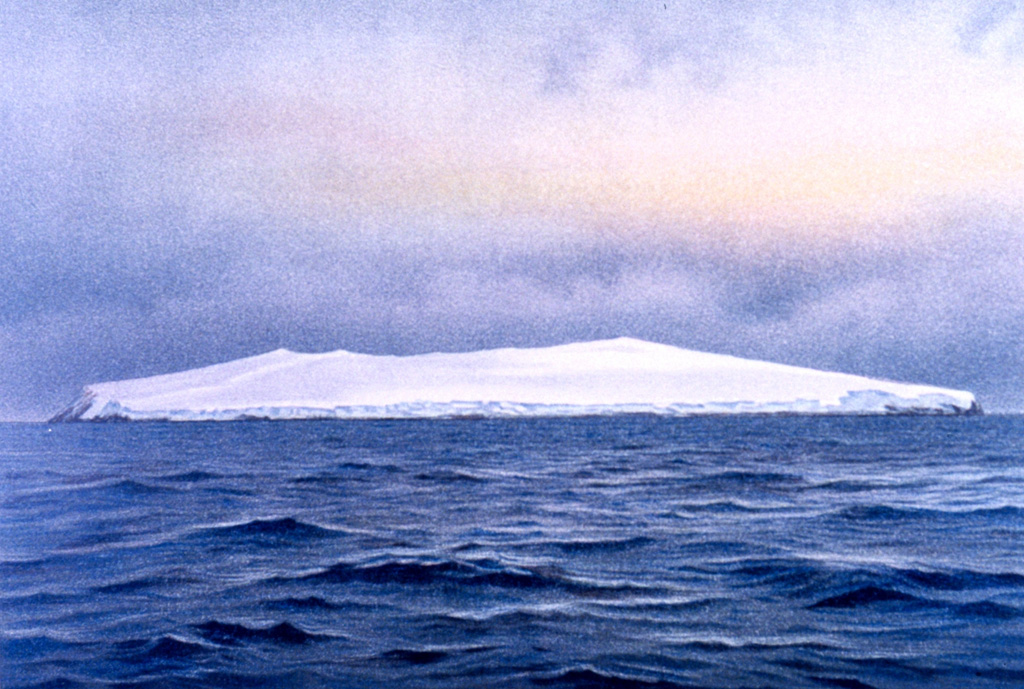
The solitary ice-covered shield volcano of Bouvet Island is located just off the Southwest Indian Ridge, east of the triple junction between the African, South American, and Antarctic plates. This basaltic-to-rhyolitic island, also referred to as Bouvetoya, was discovered by and later named for Captain Lozier-Bouvet during his 1739 search for the "great southern continent." About 95% of the uninhabited 10-km-wide island is covered by glaciers. The most prominent feature is the 3.5-km-wide Wilhelmplataet caldera, which is breached to the sea on the NW side. A late-stage rhyolitic lava dome forms the Cape Valdivia peninsula on the N flank. A paleomagnetic investigation was made by Lovlie and Furnes (1978) of a massive basaltic lava flow unit at Cape Meteor; based on oriented drill cores they tentatively inferred a minimum age of 2000 years.
Bouvet Volcano — Norway
ShieldType
50 BCELast eruption
741 mElevation
NorwayCountry
Advertisement
Recent earthquakes nearby
- …
Biggest historic earthquakes in the area
- …
Advertisement