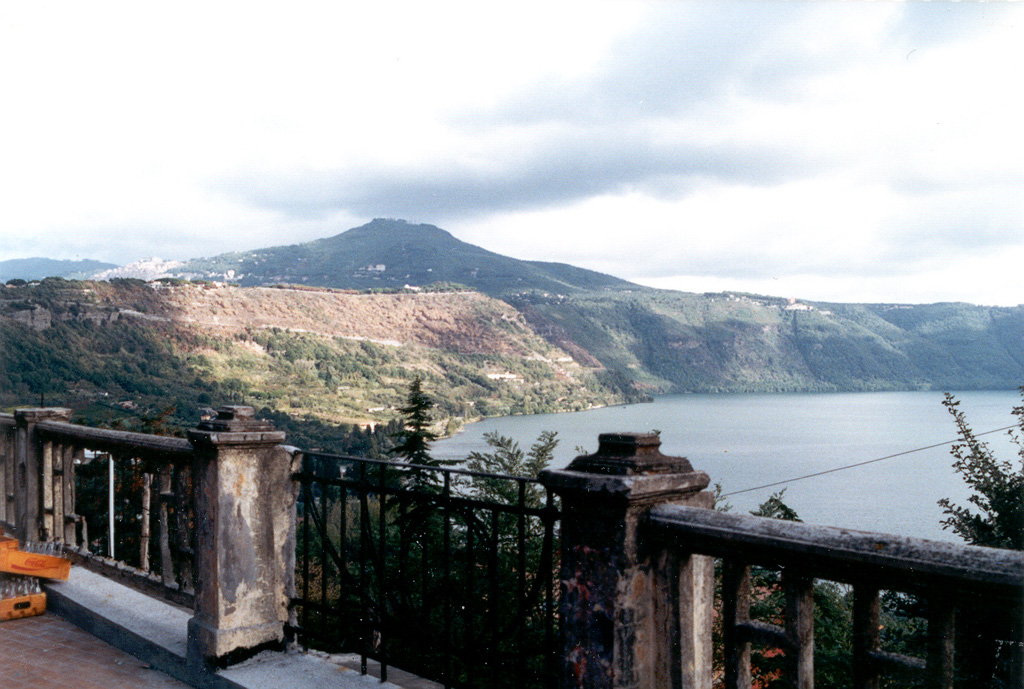
The Colli Albani (Alban Hills) complex immediately SE of Rome contains a large Pleistocene stratovolcano with a 10 x 12 km caldera formed during an eruptive period with six major explosions that produced at least 280 km3 of ejecta between about 560,000 and 350,000 years ago. Subsequent eruptions occurred from a new 5-km-wide central cone and from many phreatomagmatic craters and cones within the Artemisio-Tuscolana caldera and on its outer flanks. The post-caldera eruptions have buried the western side of the caldera rim. The largest of the post-caldera craters is Lake Albano, a 2.5 x 4 km compound maar constructed at the WSW margin of the caldera in multiple stages dating back to about 69,000 years ago. The age of the most recent eruptions from the Albano maar is not known precisely; variable dates range from about 36,000 years ago to perhaps the Holocene, when several possibly non-volcanic lake overflow lahars occurred. Reported eruptions during the Roman period are uncertain, but subsequent seismic swarms lasting up to two years have been recorded.
Colli Albani Volcano — Italy
Advertisement
Recent earthquakes nearby
- …
Biggest historic earthquakes in the area
- …
Advertisement