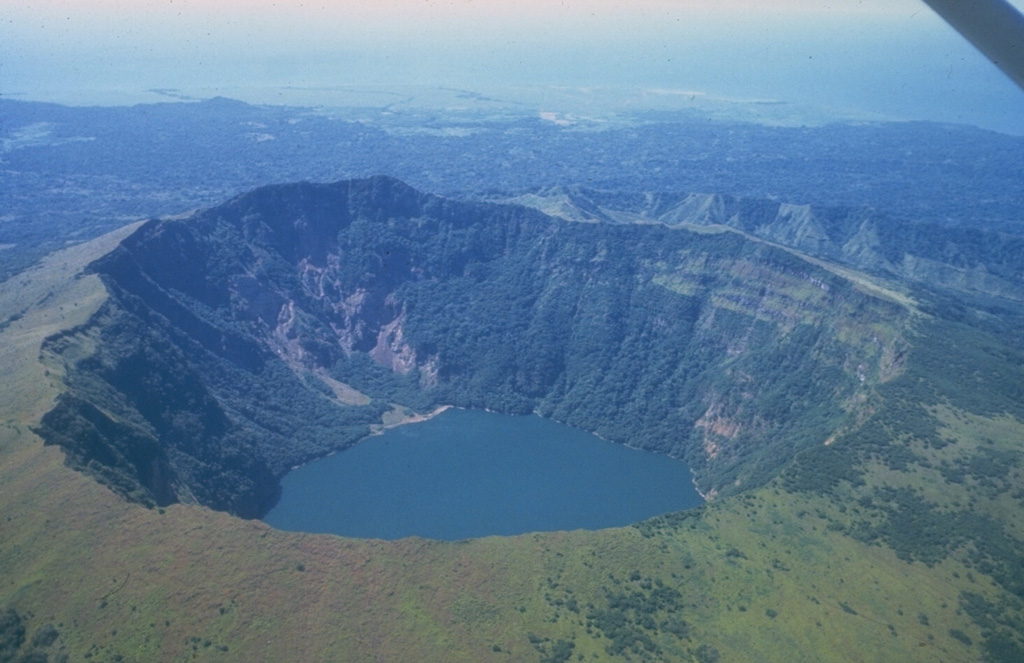
Cosigüina (also spelled Cosegüina) is a low basaltic-to-andesitic composite volcano that is isolated from other eruptive centers in the Nicaraguan volcanic chain. The stratovolcano forms a large peninsula extending into the Gulf of Fonseca at the western tip of the country. It has a pronounced somma rim on the northern side; a young summit cone rises 300 m above the northern somma rim and buries the rim on other sides. The younger cone is truncated by a large elliptical prehistorical summit caldera, 2 x 2.4 km in diameter and 500 m deep, with a lake at its bottom. Lava flows predominate in the caldera walls, although lahar and pyroclastic-flow deposits surround the volcano. A brief but powerful explosive eruption in 1835 is Nicaragua's largest during historical time. Ash fell as far away as México, Costa Rica, and Jamaica, and pyroclastic flows reached the Gulf of Fonseca.
Cosiguina Volcano — Nicaragua
Advertisement
Recent earthquakes nearby
- …
Biggest historic earthquakes in the area
- …
Advertisement