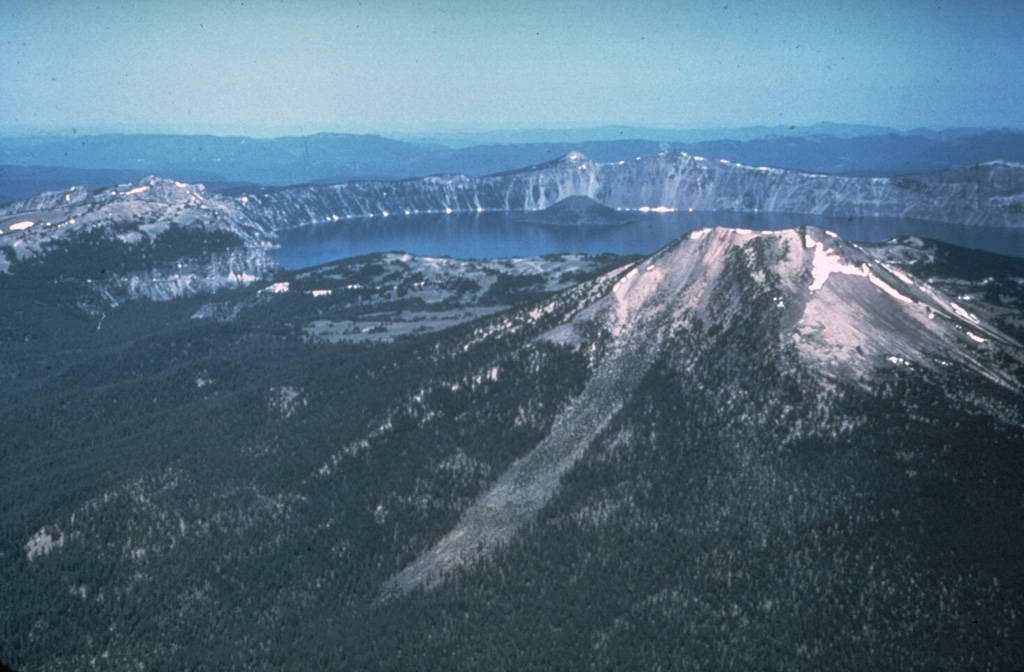
The spectacular 8 x 10 km Crater Lake caldera in the southern Cascades of Oregon formed about 7,700 years ago as a result of the collapse of a complex of overlapping shield and stratovolcanoes known as Mount Mazama. The cone-building stage, during which at least five andesitic and dacitic shields and stratovolcanoes were constructed, took place between about 420 and 40 thousand years ago (ka). A series of rhyodacitic lava domes and flows and associated pyroclastic rocks were erupted between about 30 ka and the climactic eruption. The explosive eruptions triggering collapse of the 8-10 km wide caldera about 7500 years ago were among Earth's largest known Holocene eruptions, distributing tephra as far away as Canada and producing pyroclastic flows that traveled 40 km from the volcano. A 5-km-wide ring fracture zone is thought to mark the original collapse diameter. The deep blue waters of North America's second deepest lake, at 600 m, fill the caldera to within 150-600 m of its rim. Post-caldera eruptions within a few hundred years of caldera formation constructed a series of small lava domes on the caldera floor, including the partially subaerial Wizard Island cinder cone, and the completely submerged Merriam Cone. The latest eruptions produced a small rhyodacitic lava dome beneath the lake surface east of Wizard Island about 4,200 years ago.
Crater Lake Volcano — United States
Advertisement
Recent earthquakes nearby
- …
Biggest historic earthquakes in the area
- …
Advertisement