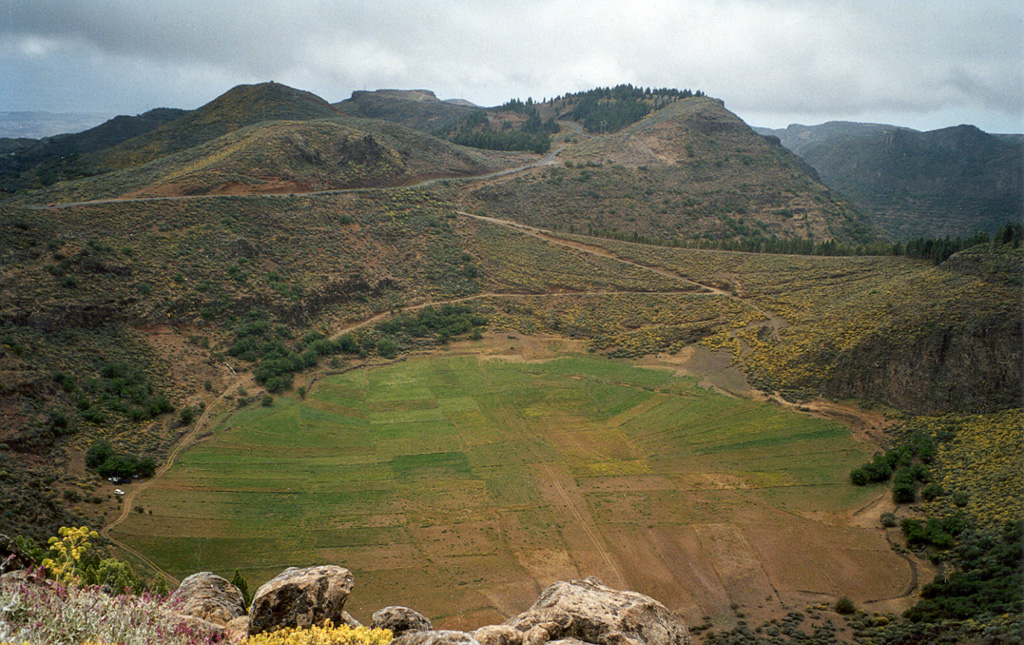
The circular 60-km-wide island of Gran Canaria in the middle of the Canary archipelago includes three major volcanic structures, and has been modified by caldera collapse, gravitational edifice failure, and extensive erosion resulting in steep-walled radial gorges called barrancos. Although the island is largely Miocene-to-Pliocene, middle Quaternary scoria cones and lava flows are found in the northern and eastern parts of the massive shield volcano, which is cut by a major NW-SE-trending rift zone that extends across the island and fed flows primarily to the NE. Basaltic cones and lava flows of Holocene age are situated within a NW-trending zone from Berrazales to Bandama, and at Las Isletas, a peninsula on the NE coast. One cinder cone was radiocarbon dated at about 3,000 years before present, and other cones and flows may be less than 1,000 years old.
Gran Canaria Volcano — Spain
Advertisement
Recent earthquakes nearby
- …
Biggest historic earthquakes in the area
- …
Advertisement