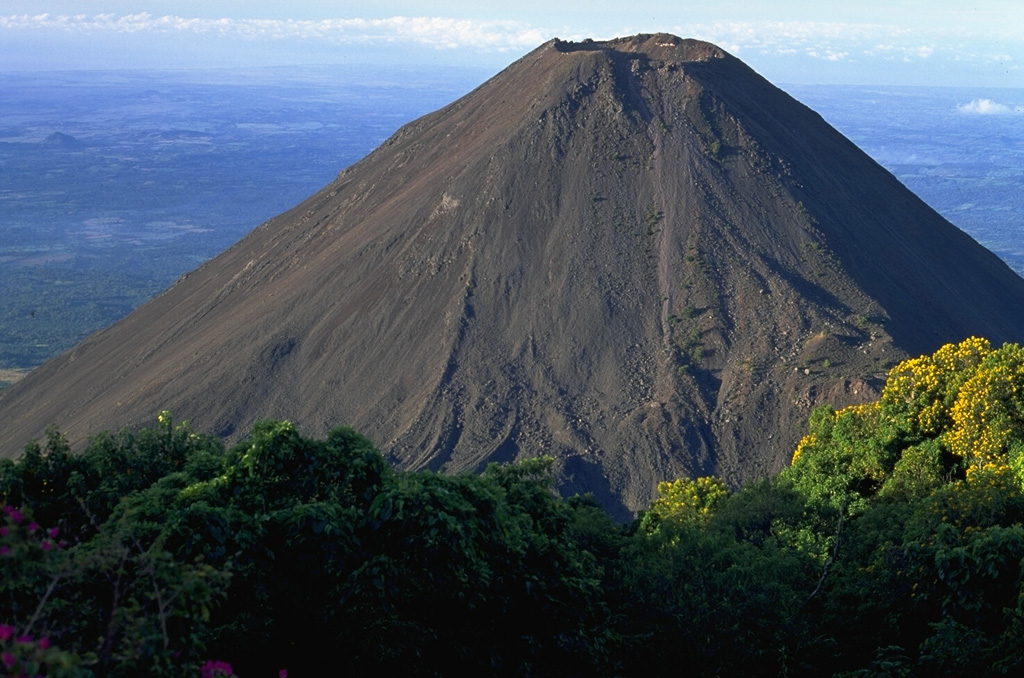
Volcán de Izalco began growing in 1770 CE on the southern flank of Santa Ana volcano, eventually building a steep 650-m-high stratovolcano truncated by a 250-m-wide summit crater. Frequent Strombolian eruptions during the two centuries prior to the cessation of activity in 1966 provided a night-time beacon for ships, causing it to be known as El Faro, the "Lighthouse of the Pacific." The dominantly basaltic andesite tephra and lava flows are geochemically distinct from those of both Santa Ana and its fissure-controlled flank vents. Lava flows have primarily erupted from flank vents, traveling as far as about 7 km south down the slopes of Santa Ana.
Izalco Volcano — El Salvador
Advertisement
Recent earthquakes nearby
- …
Biggest historic earthquakes in the area
- …
Advertisement