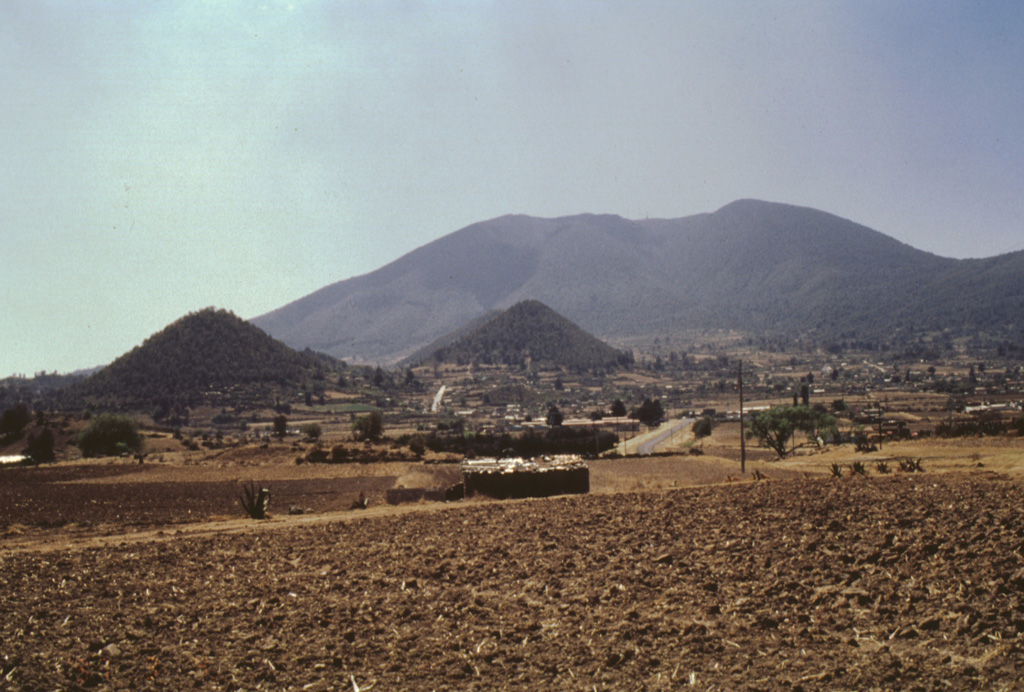
The composite Jocotitlán volcano, which rises above the Toluca basin 60 km WNW of Mexico City, was constructed during the Pleistocene of andesitic-to-dacitic lava flows. A major obsidian-bearing dacitic Plinian eruption was followed by the emplacement of a dacitic lava-dome complex, accompanied by lava effusion, pumice-fall eruptions, and pyroclastic surges. The most prominent feature is an escarpment open to the NE that formed as a result of gravitational failure during the early Holocene. The resulting debris-avalanche deposit covers an 80 km2 area to the NE. Lava dome emplacement accompanied by pyroclastic flows and surges subsequently filled much of the avalanche scarp. The latest known eruption occurred about 750 years ago and produced block-and-ash flows and pyroclastic surges.
Jocotitlan Volcano — Mexico
Advertisement
Recent earthquakes nearby
- …
Biggest historic earthquakes in the area
- …
Advertisement