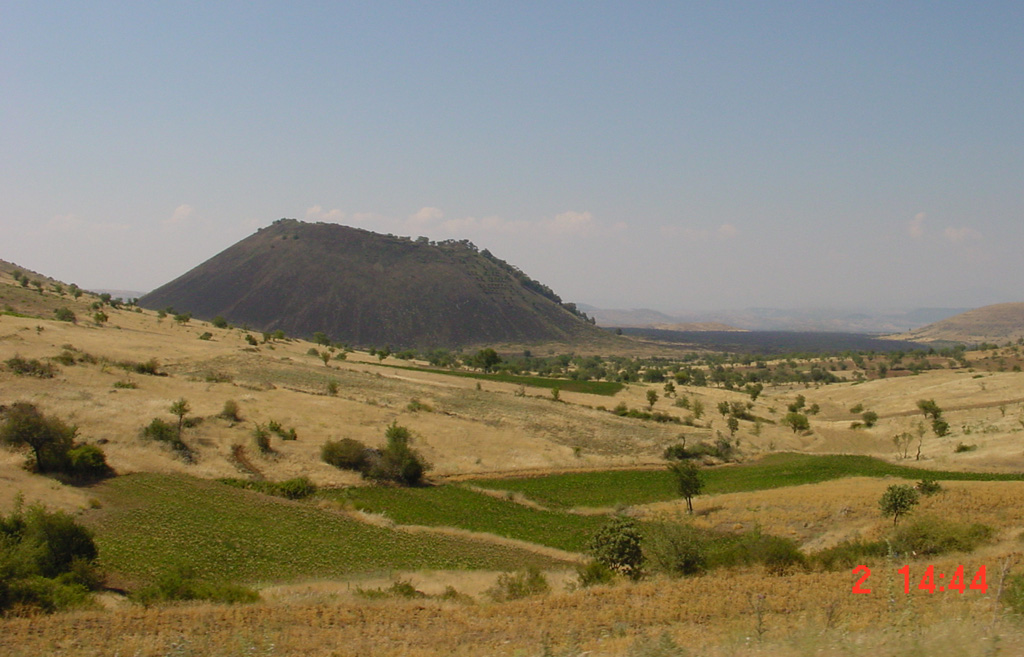
The Kula volcanic field, the westernmost area of young volcanism in Turkey, lies about 450 km WNW of its closest Holocene neighbor in central Turkey, the Karapinar volcanic field. The Kula field consists of a broad area of Quaternary alkaline basanitic-to-phonotephritic cinder cones and maars erupted along a roughly E-W line SW of the city of Selendi. Most are Pleistocene in age, between about 1.1 million and 10,000 years old. The initial stage produced lava flows from vents along the ring fracture of caldera identified from satellite images. The second and third stages took place along an E-W graben and produced lava flows with ultramafic xenoliths. Although activity was considered to have continued until the beginning of the Holocene (Yilmaz, 1990), or almost to historical times (Borsi et al., 1972), the age of the most recent eruption is not known.
Kula Volcano — Turkiye
Advertisement
Recent earthquakes nearby
- …
Biggest historic earthquakes in the area
- …
Advertisement