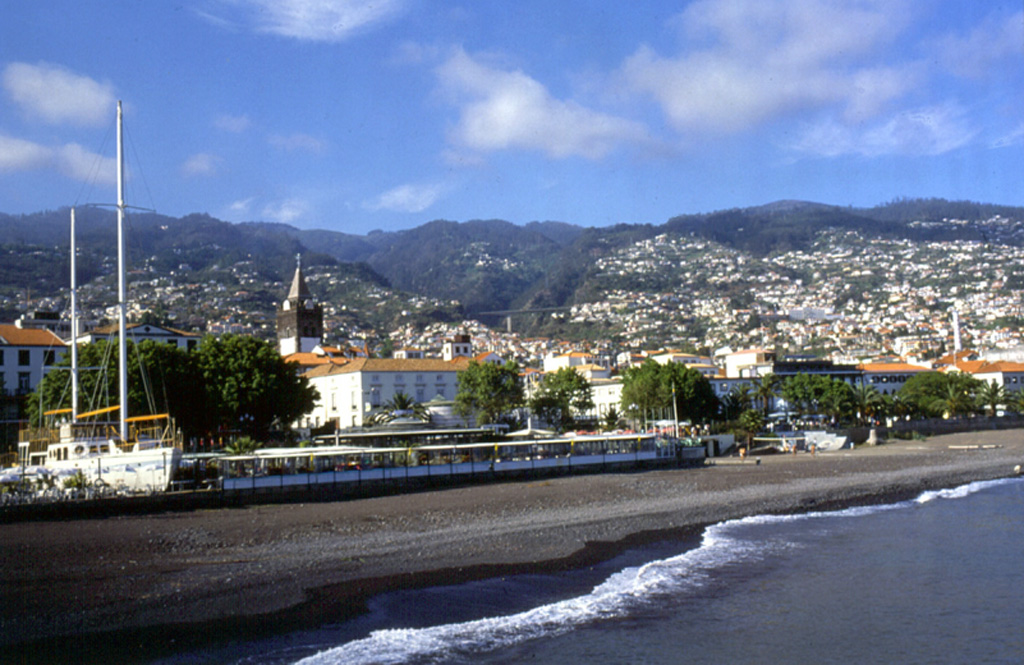
Madeira Island is the emergent top of a massive shield volcano that rises about 6 km from the floor of the Atlantic Ocean and forms the largest island of the 90-km-long Madeira Archipelago. Construction of the volcano along E-W rift zones from the Miocene to about 700,000 years ago was followed by a period of extensive erosion and possible edifice collapse. Two steep-walled amphitheaters open to south in the central part of the island. Late-stage eruptions are scattered throughout the island and lasted until the Holocene, producing scoria cones and intra-canyon lava flows covering rocks of the older eroded edifice. The youngest activity lies in the west-central part of the island, and consists of cinder cones in the upper Sao Vicente valley, a series of intra-canyon flows, and a tephra layer on top of the Paul da Serra plateau dated at about 6,500 years ago.
Madeira Volcano — Portugal
Advertisement
Recent earthquakes nearby
- …
Biggest historic earthquakes in the area
- …
Advertisement