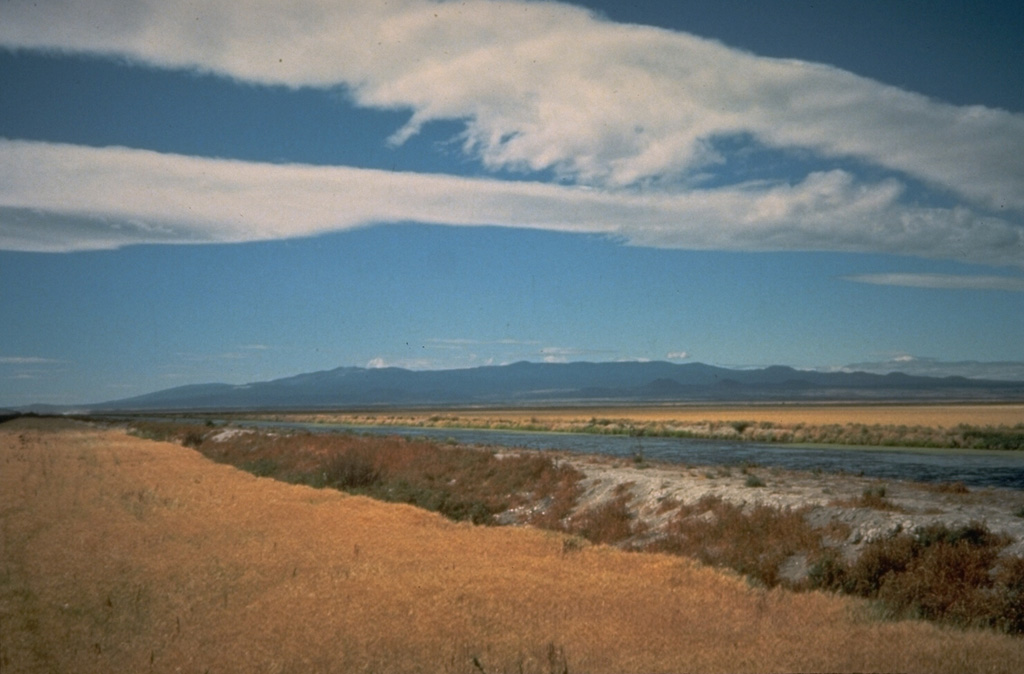
Medicine Lake is a large Pleistocene-to-Holocene, basaltic-to-rhyolitic shield volcano east of the main axis of the Cascade Range. Volcanism, similar in style to that of Newberry volcano in Oregon, began less than one million years ago. A roughly 7 x 12 km caldera truncating the summit contains a lake that gives the volcano its name. A series of young eruptions lasting a few hundred years began about 10,500 years before present (BP) and produced 5 km3 of basaltic lava. Nine Holocene eruptions clustered during three eruptive episodes at about 5000, 3000, and 1000 years ago produced a chemically varied group of basaltic lava flows from flank vents and silicic obsidian flows from vents within the caldera and on the upper flanks. The last eruption produced the massive Glass Mountain obsidian flow on the E flank about 900 years BP. Lava Beds National Monument on the N flank of Medicine Lake shield volcano contains hundreds of lava-tube caves displaying a variety of spectacular lava-flow features, most of which are found in the voluminous Mammoth Crater lava flow, which extends in several lobes up to 24 km from the vent.
Medicine Lake Volcano — United States
Advertisement
Recent earthquakes nearby
- …
Biggest historic earthquakes in the area
- …
Advertisement