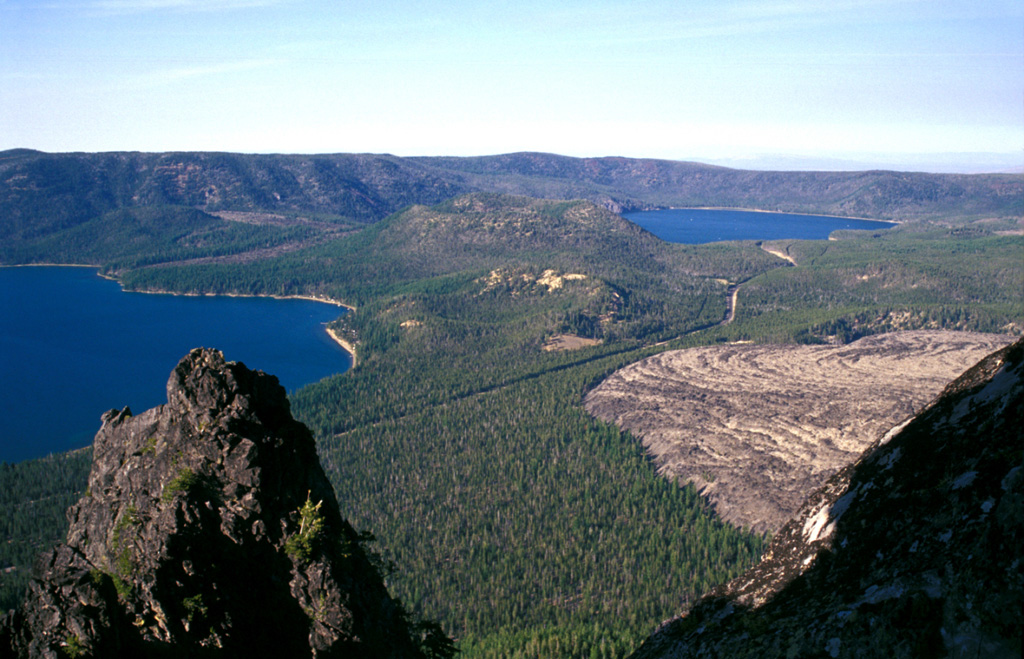
Newberry volcano, situated east of the Cascade Range, covers an area of about 1,600 km2. The low-angle basaltic to basaltic andesite shield volcano includes more than 400 cinder cones, but has also produced major silicic eruptions associated with formation of a 6 x 8 km summit caldera containing two lakes. The earliest eruptive products (less than 0.73 Ma) consist of a sequence of ash-flow and airfall tuffs. Caldera collapse is thought to be associated with major ash deposits from about 0.5 and 0.3-0.5 Ma. These eruptions were preceded by the emplacement of numerous mafic cones and vents, and silicic lava domes and flows, many of which are aligned NNW and NNE parallel to regional fault zones. Six major eruptions from the early Holocene to about 1,300 years ago have included both basaltic lava flows from flank vents, the explosive ejection of rhyolitic pumice and pyroclastic flows, and the extrusion of obsidian flows within the caldera.
Newberry Volcano — United States
Advertisement
Recent earthquakes nearby
- …
Biggest historic earthquakes in the area
- …
Advertisement