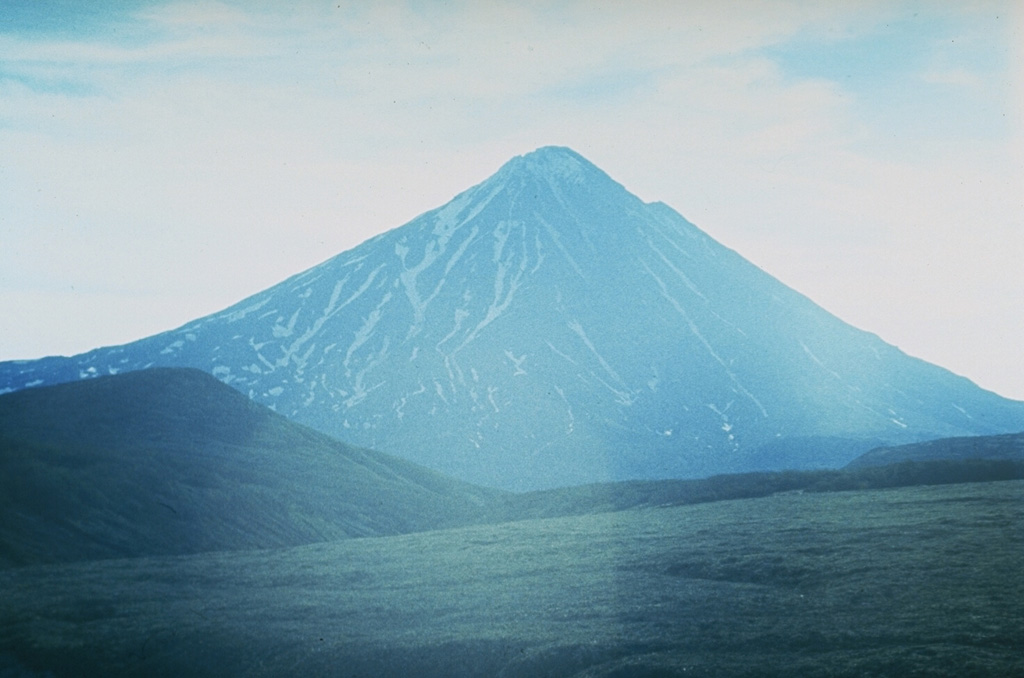
The steep-sided conical Opala stratovolcano was constructed during the late-Pleistocene to Holocene at the northern end of the 12 x 14 km, 40,000-year-old Opala caldera. The volcano has produced andesitic-dacitic lavas and tephras through most of the Holocene. The latest major explosive eruption formed the prominent Barany Amphitheater on the SE flank about 1,500 years ago, producing a voluminous 9-10 km3 regional rhyolitic tephra layer. The 2 x 2.5 km crater is filled by a lava dome 1 km wide. Mild explosive eruptions have been reported from summit and flank vents, although no associated tephra deposits have been found. Tephrochronology work has revealed evidence for a large explosive eruption from the summit crater about 300 years ago.
Opala Volcano — Russia
Advertisement
Recent earthquakes nearby
- …
Biggest historic earthquakes in the area
- …
Advertisement