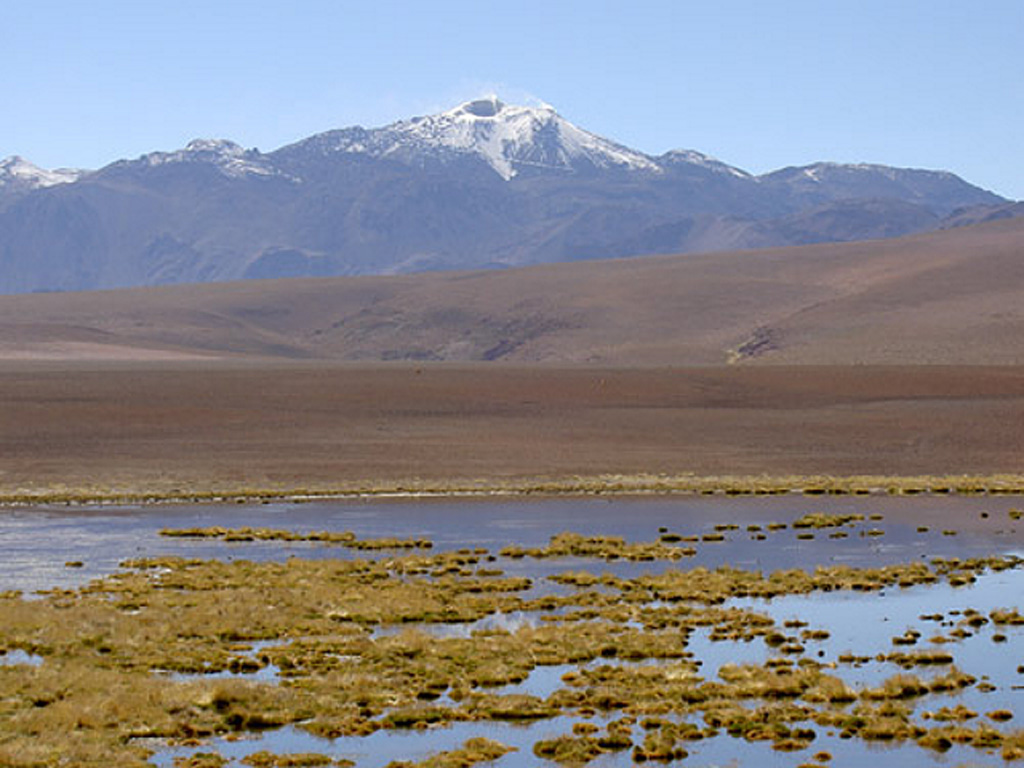
Volcán Putana, also known as Jorgencal or Machuca, is part of a large, roughly N-S-trending volcanic complex that covers an area of 600 km2. Vigorous fumarolic activity is visible at the summit from long distances. The main edifice, which formed primarily by lava effusion, consists of accumulated postglacial dacitic lava domes and flows mantling an older pre-Holocene volcano. The youngest basaltic andesite lava flows are viscous and rarely extend more than 3 km. A major eruption of unspecified character was reported in the early 19th century (Rudolph, 1955; Guest 1981, pers. comm.), although González-Ferrán (1995) indicated that no historical eruptions had occurred.
Putana Volcano — Chile
Advertisement
Recent earthquakes nearby
- …
Biggest historic earthquakes in the area
- …
Advertisement