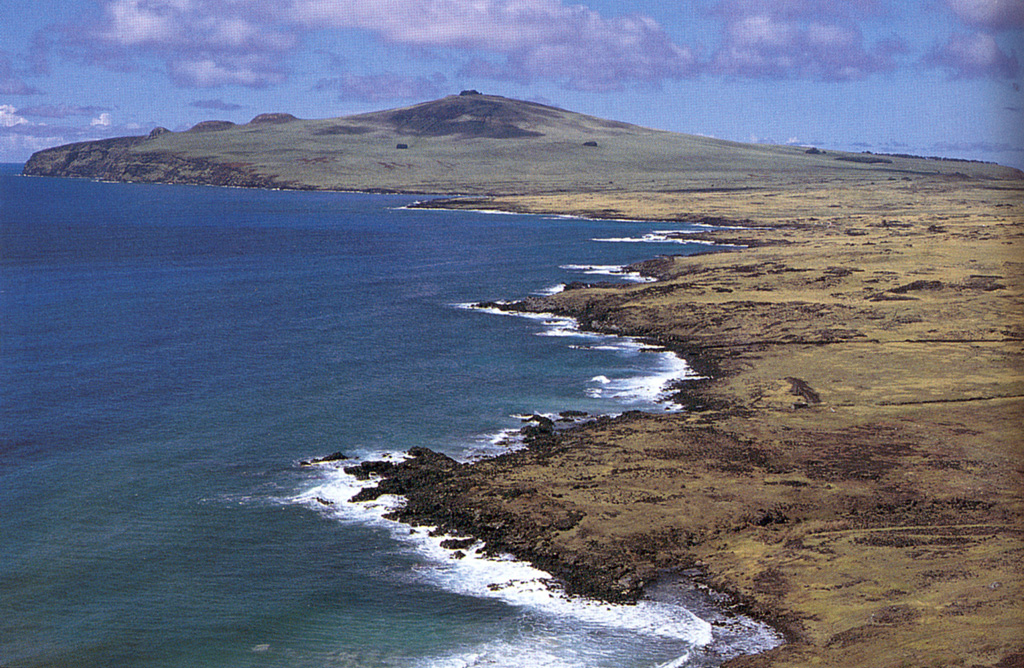
The triangular Rapa Nui (also known as Isla de Pascua, or Easter Island), is renowned for its dramatic megalithic statues of hand-carved basalt. The island sits atop the largely submarine Salas y Gómez Ridge, which trends eastward from the East Pacific Rise. It is composed of three principal volcanoes and more than 70 subsidiary vents. Rano Kau at the SW tip includes flat-bottomed crater 1.5 km wide, while Poike volcano is at the E point; both are of Pleistocene age. Terevaka is a broad shield volcano of Pliocene-to-Pleistocene age at the northern point of the island, which is capped by many pyroclastic cones; the last stage of activity consisted of eruptions from multiple rift zones. The latest lava flows, at Hiva-Hiva near the west-central coast, are thought to be less than 2,000 years old.
Rapa Nui Volcano — Chile
Advertisement
Recent earthquakes nearby
- …
Biggest historic earthquakes in the area
- …
Advertisement