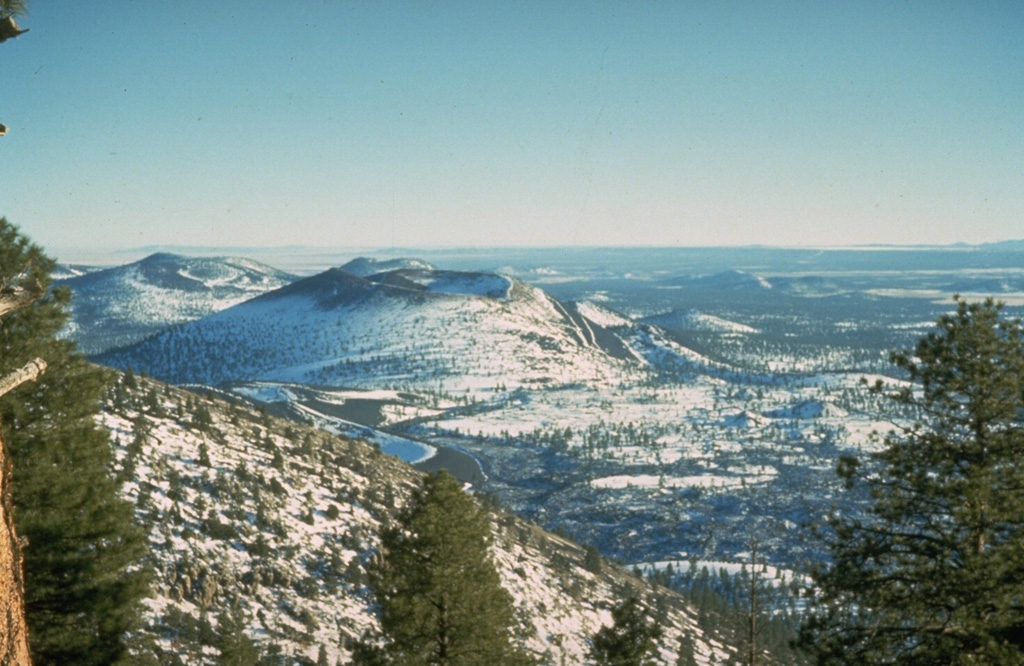
The vast San Francisco Volcanic Field in northern Arizona has more than 550 vents, the youngest of which is Sunset Crater, named for its brilliantly colored scoria deposits on the cone. The eruptions forming the 340-m-high Sunset Crater cinder cone were initially considered from tree-ring dating to have begun between the growing seasons of 1064-1065 CE; however, more recent paleomagnetic evidence places the activity between about 1080 and 1150 CE. The largest vent, Sunset Crater itself, was the source of the Bonito and Kana-a lava flows that extended about 2.5 km NW and 9.6 km NE, respectively. Additional vents along a 10-km-long fissure extending SE produced small spatter ramparts and a 6.4-km-long lava flow to the east. Ash and lapilli covered an area of more than 2,100 km2 and forced the abandonment of settlements of the indigenous Sinagua Indians.
San Francisco Volcanic Field Volcano — United States
Advertisement
Recent earthquakes nearby
- …
Biggest historic earthquakes in the area
- …
Advertisement