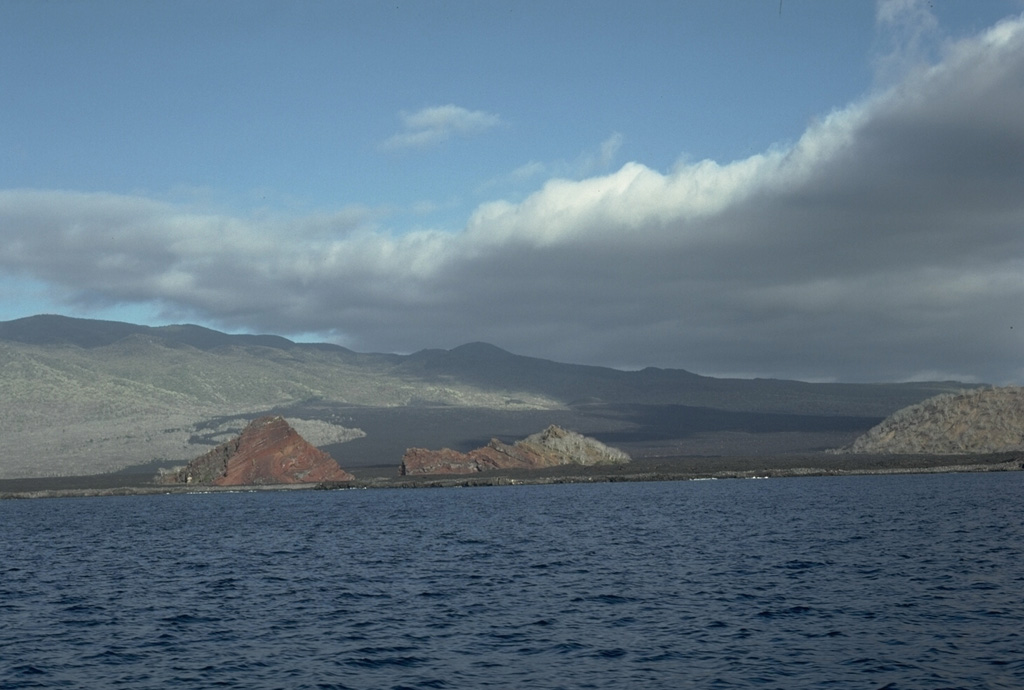
The elongated shield volcano of Santiago Island, also known as San Salvador Island or James Island, has numerous scattered Holocene pyroclastic cones. Fresh-looking lava flows from these cones cover the flanks. The summit ridge, lined with a chain of NW-trending cinder and spatter cones, is located at the NW end of the island. Prominent flank tuff cones occur at the western and eastern coasts. The most recent activity has been concentrated at the NW and SE ends of the island. The pahoehoe lava flows at James and Sullivan Bays, on opposite ends of the island, were erupted in the past few hundred years. The James Bay flows were dated by fragments of marmalade pots left by buccaneers in 1684 that were subsequently embedded in the lava flows described by Charles Darwin in 1835.
Santiago Volcano — Ecuador
Advertisement
Recent earthquakes nearby
- …
Biggest historic earthquakes in the area
- …
Advertisement