On the morning of 4 July 2019, Independence Day, a magnitude 6.4 foreshock struck near Searles Valley in California's Mojave Desert, roughly 200 km northeast of Los Angeles. Barely 34 hours later, at 20:19 PDT on 5 July, a magnitude 7.1 mainshock ruptured a few kilometres away, centred about 18 km north-northeast of the small city of Ridgecrest in Kern County — the strongest earthquake to hit California since the magnitude 7.1 Hector Mine quake two decades earlier, in 1999.

Remarkably for a quake this size, no deaths were directly attributed to either shock; officials counted around two dozen injuries across the region. The town of Trona and the city of Ridgecrest took the worst structural damage — cracked roads, broken water and gas lines, and dozens of homes red-tagged as unsafe — while the adjoining Naval Air Weapons Station China Lake suffered heavy damage to runways, roads and buildings that took years to fully repair.

What made Ridgecrest a landmark case for seismologists was its fault geometry. The USGS found the sequence ruptured a dense, previously unmapped web of small faults within the Eastern California Shear Zone, a wide deformation belt between the San Andreas Fault and Death Valley. The M6.4 foreshock broke a northwest-trending right-lateral fault, while the M7.1 mainshock ruptured a nearly perpendicular, northeast-trending left-lateral fault the next day — a rare, cleanly recorded example of a conjugate fault system rupturing in sequence.
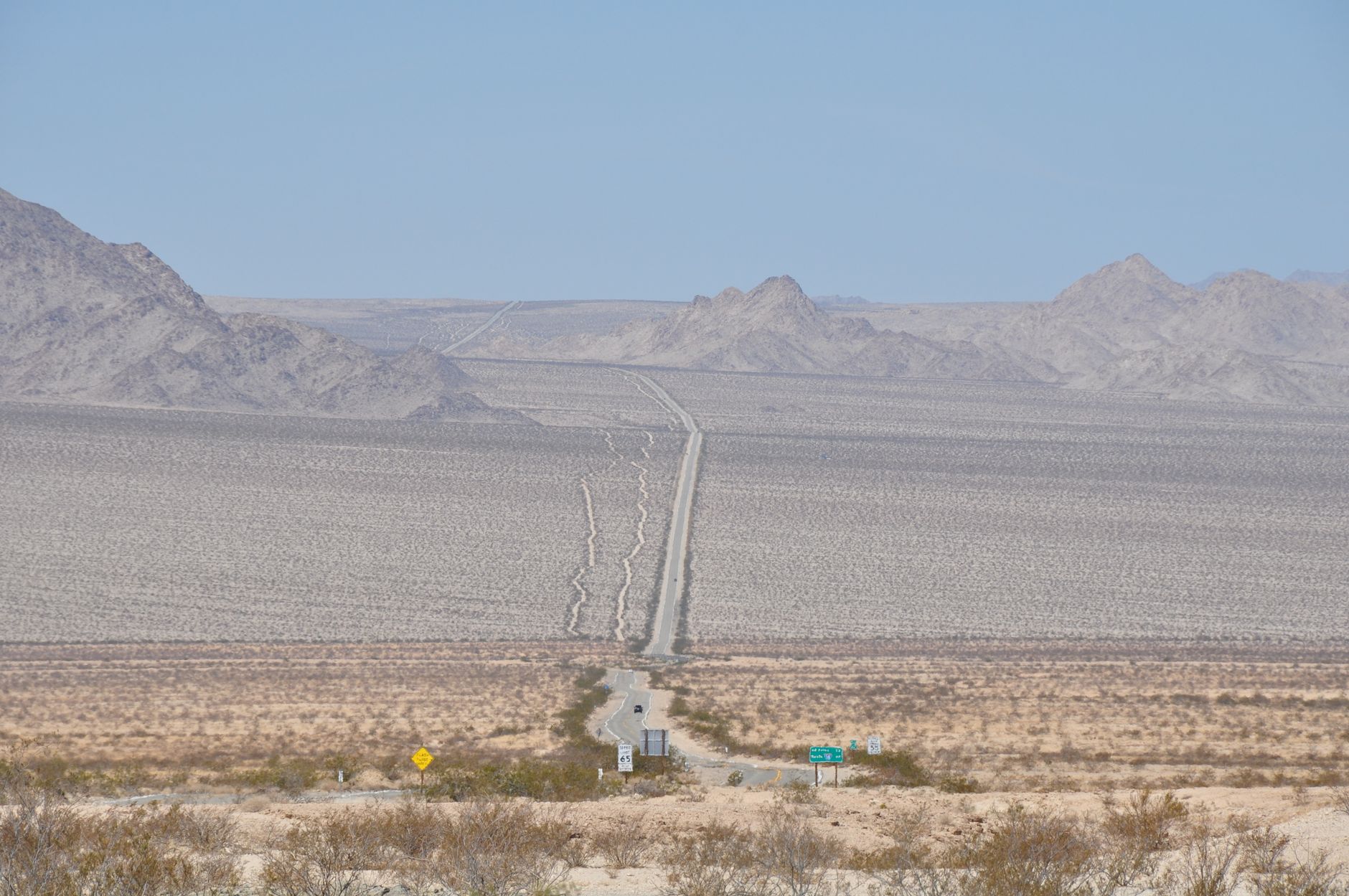
Dense GPS and satellite radar coverage of the sparsely populated Mojave Desert let researchers map the rupture in unusual detail, and the sequence went on to generate more than 100,000 recorded aftershocks over the following year — one of the most thoroughly instrumented aftershock sequences the USGS has ever studied. That dataset reshaped hazard models for the Eastern California Shear Zone, a zone long known to be active but historically overshadowed by the San Andreas Fault to its west.
Because the epicentres sat in remote desert rather than a dense metropolitan area, Ridgecrest became a widely cited case study in why "magnitude" and "damage" are different things: a quake as strong as some infamous killers elsewhere caused no deaths at all here, simply because so few people and structures stood in its path.